The Complete Bedroom Revamp Checklist: From Lighting to Layout
Your bedroom should be a sanctuary. It’s where you rest, recharge, and start each day.
Yet many of us overlook the potential to create a truly transformative space.
A complete bedroom revamp doesn’t require a significant renovation or breaking the bank.
Instead, it’s about making strategic decisions that improve both function and comfort. This checklist will guide you through every essential element.
Contents
Start with Your Layout
Before you buy anything new, assess your current bedroom layout. Walk through the space and consider traffic flow.
Can you move from the door to your bed without obstacles? Is your furniture arrangement awkward or inefficient?
The foundation of any good bedroom layout keeps the bed as the focal point.
Position it where you can see the door without being directly in line with it. This creates a sense of security and psychological comfort.
Leave enough space on either side for nightstands. If your room is small, consider a platform bed that doubles as storage.
Next, think about other essential pieces. A dresser should be accessible without blocking walkways. If you have a desk, position it near a window for natural light.
Don’t push all furniture against the walls just to open up space; this often looks impersonal. Instead, create intentional zones for different activities.
Evaluate Your Lighting Situation
Lighting transforms a room more dramatically than anything else. Most bedrooms suffer from inadequate or harsh lighting. The solution involves layering different light sources.
Start with ambient lighting. This is your general illumination, often provided by ceiling lights. Many bedroom ceiling lights are outdated or too bright.
Consider replacing standard fixtures with softer options, such as flush-mounted frosted-glass fixtures or dimmable LED panels.
Dimmable ceiling lights give you flexibility, bright enough for cleaning or getting dressed, but soft for winding down.
Beyond ceiling lights, add task lighting for specific areas. A reading lamp beside your bed prevents strain. A small desk lamp provides focused light without harsh shadows.
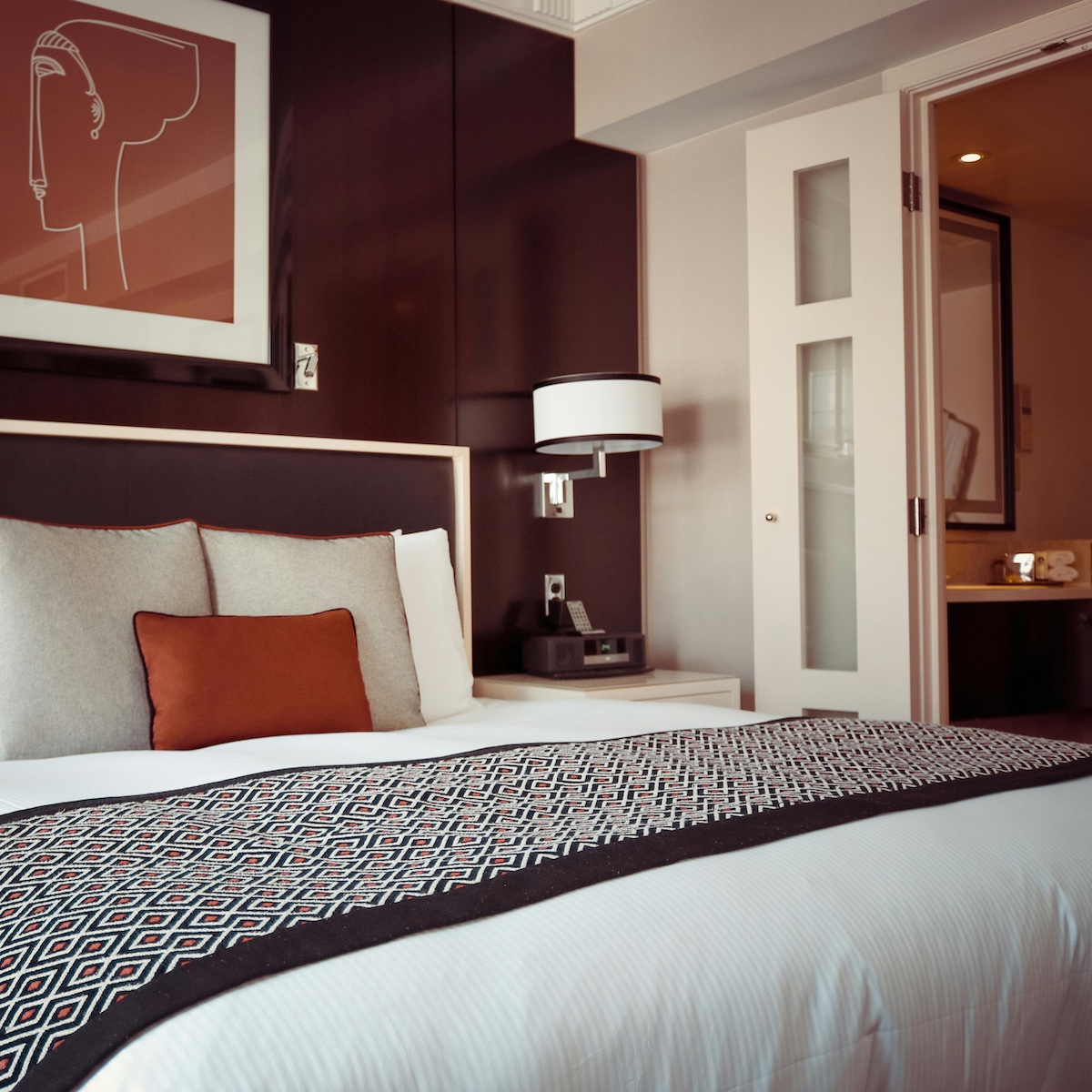
Wall sconces on either side of your bed offer both function and style while eliminating the need for table lamps.
Finally, incorporate accent lighting through lamps, string lights, or LED strips. These create ambiance and can significantly impact your room’s mood.
Warm-toned bulbs (2700K) promote relaxation, while cooler tones (4000K) energize the space.
Choose Your Color Palette
Colors set the emotional tone. Your bedroom should promote calm and restfulness.
Soft neutrals like beige, soft gray, and warm white work beautifully. These colors also make spaces feel larger and more cohesive.
If you love color, consider gentle pastels or muted jewel tones. Paint one accent wall to add interest without overwhelming the space. Keep ceiling and trim light to avoid a closed-in feeling.
Remember that paint is one of the easiest changes to make if you later want to switch directions.
Upgrade Your Window Treatments
Windows significantly impact how your bedroom feels. Natural light is essential for sleep-wake cycles, but you also need privacy and darkness when sleeping.
Invest in blackout curtains or lined drapes that block external light while maintaining style. Pair them with sheer panels to filter harsh daylight. Motorised blinds are a luxury worth considering; they add sophistication and convenience.
Assess Your Furniture and Storage
Clutter disrupts sleep and reduces relaxation. Take inventory of your furniture and be honest about what serves you.
A bedroom shouldn’t be a storage unit. Keep only pieces that are beautiful and functional.
For storage, think vertical. Floating shelves display decor while keeping surfaces clear. Under-bed storage containers hide seasonal items.
A dresser with deep drawers minimizes visible clutter. Consider your lifestyle; if you work from home, you might need a desk. If you practice yoga, ensure you have an open floor space.
Invest in Quality Bedding
Your bed is where you spend nearly a third of your life. Quality bedding directly impacts sleep quality. Look for high thread-count cotton sheets, a supportive mattress, and pillows that suit your sleeping position.
Layering textures through blankets, quilts, and throw pillows creates visual interest and comfort. Stick to your color palette to maintain a cohesive, restful aesthetic.
Add Personal Touches
A blank room feels sterile. Incorporate elements that reflect your personality. Artwork, mirrors, plants, and family photos humanize the space. Mirrors also create the illusion of more space and bounce light around the room.
Plants improve air quality and add life to corners. A tall plant next to your bed adds visual height. Small potted succulents on shelves require minimal care.
Don’t Forget About Comfort Extras
Small additions dramatically improve comfort. A plush area rug softens hard floors and defines the space. A comfortable reading chair creates a cozy corner. Soft throw blankets draped over furniture invite relaxation.
Scent matters too. Lavender or eucalyptus essential oil diffusers promote calm. Keep products minimal to prevent overwhelming the space.
Final Thoughts
A bedroom revamp is a process. You don’t need to tackle everything at once. Start by evaluating your layout and lighting; these two elements have the greatest impact. From there, slowly add pieces that align with your vision.
The goal is to create a space that feels intentional, restful, and uniquely yours. When your bedroom truly reflects your needs and style, you’ll naturally spend more time relaxing there, making every dollar invested worthwhile.