Kitchen Habits That Quietly Ruin Your Plumbing
Small kitchen choices can create expensive plumbing problems long before you notice a slow drain or unpleasant odor. Grease, food scraps and harsh cleaning habits often send materials into pipes that household plumbing cannot handle well. A few practical changes can help keep water moving, reduce odors and protect the septic system connected to your home.
Contents
The Danger of Washing Grease Down the Sink
Hot cooking grease may look harmless because it pours like liquid, but it cools and hardens inside plumbing. The resulting coating traps crumbs, soap residue and other debris until water has little room to pass. According to guidance on fats, oils and grease, these materials can also contribute to sewer blockages and costly backups.
Hot water and dish soap don’t solve the problem. They may carry grease farther into the line, where it cools beyond easy reach. Common troublemakers include bacon drippings, butter, gravy, creamy sauces and oil left after frying.
Smarter Ways to Dispose of Cooking Fats
Let cooking fat cool before throwing it away. Small amounts can solidify in a bowl lined with foil or parchment paper, while larger quantities can go into a sealed container such as an empty jar or food tub. Place the closed container in the trash according to your local waste rules.
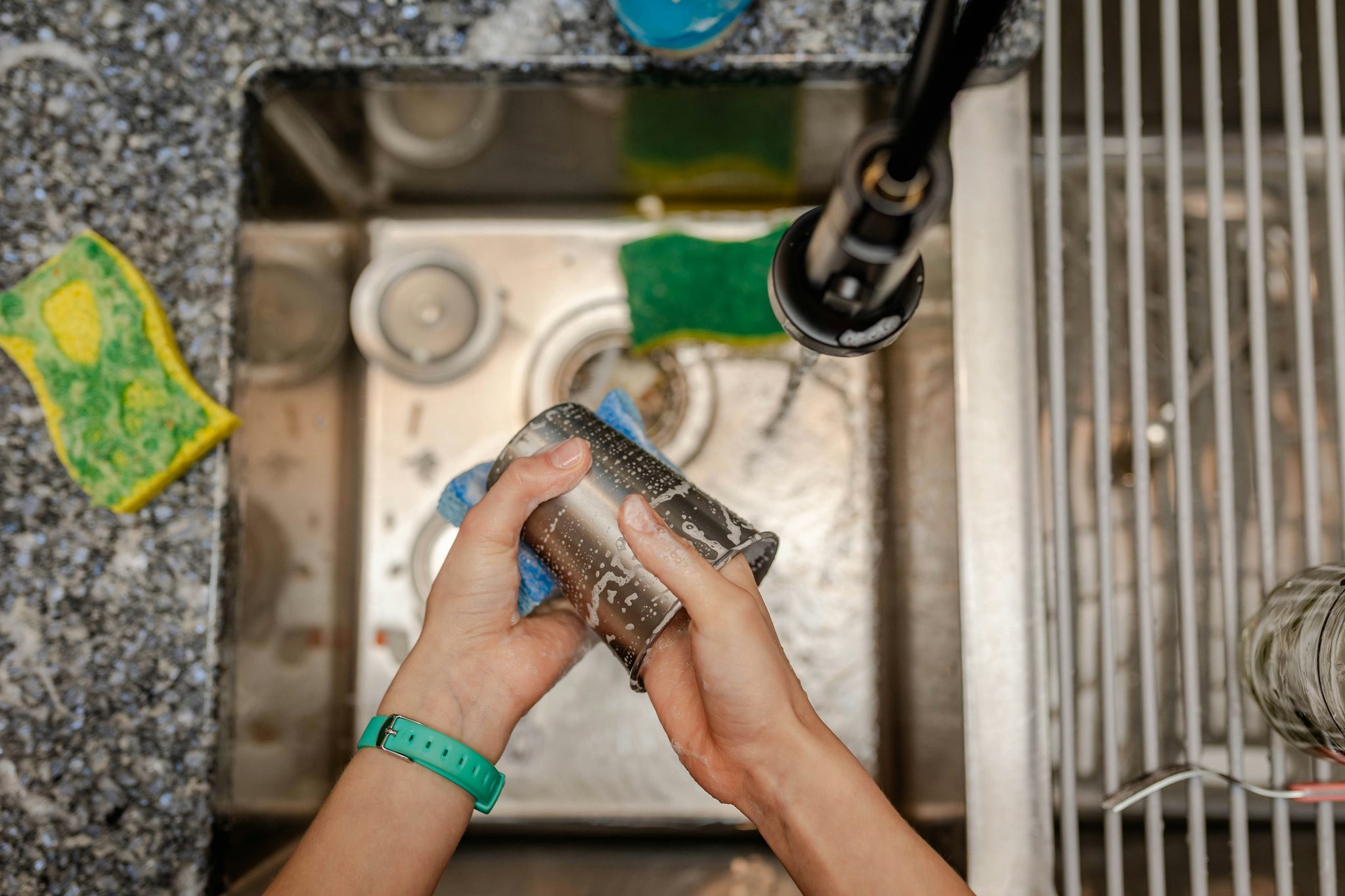
Before washing a greasy skillet, wipe it thoroughly with a paper towel. A pan scraper also removes stuck food without pushing it into the drain. If your area accepts used cooking oil for recycling, store the oil in its original bottle or another clearly labeled, leakproof container. Never mix it with water, cleaners or other household liquids because contamination may prevent recycling.
Why Garbage Disposals Are Overrated
A garbage disposal can make cleanup easier, but it doesn’t turn food into liquid. Ground particles still travel through the drain and may collect in bends, cling to greasy pipe walls or add extra solids to a septic tank.
Scrape plates into the trash or compost bin before rinsing them. Fibrous foods such as celery, corn husks and onion skins can tangle around disposal components. Coffee grounds, eggshells, rice and pasta may also create dense buildup or swell after entering the drain.
When you do use the disposal, feed it small portions and run cold water during operation. Continue the water for several seconds afterward to help move remaining particles through the line.
When You Need Professional Septic Services
Recurring slow drains throughout the house, sewage odors, gurgling fixtures or unusually wet ground near the drain field deserve prompt attention. A single sluggish kitchen sink may have a local clog, but several affected fixtures can point to a larger wastewater problem. Avoid opening the tank or using aggressive chemical additives while trying to diagnose it yourself.
The EPA’s septic system guidance recommends regular inspections and pumping based on household size, tank capacity and the amount of wastewater generated. Orlando-area homeowners and business owners can contact qualified septic services for pumping, inspections, repairs or drain field concerns. Call sooner if wastewater backs up indoors, since continued water use can worsen the problem and increase cleanup needs.
Daily Habits for a Healthier Drain
Use a sink strainer to catch peels, crumbs and small food scraps before they enter the drain. Empty it into the trash or compost after each meal so debris doesn’t sit in standing water and create odors. Running the dishwasher only when it is full can also reduce the volume of wastewater entering a septic system.
Choose routine mechanical cleaning for minor buildup. Remove and wash the strainer, clean the sink stopper and use a drain snake when appropriate. Frequent chemical drain cleaner use can damage some pipes, create hazardous splashes and complicate professional repair work.
Pay attention to changes in drainage speed. If the sink takes longer to empty for several days, address it before the line closes completely. The paper towel used to wipe tonight’s skillet is a much simpler fix than dealing with greasy wastewater on the kitchen floor.